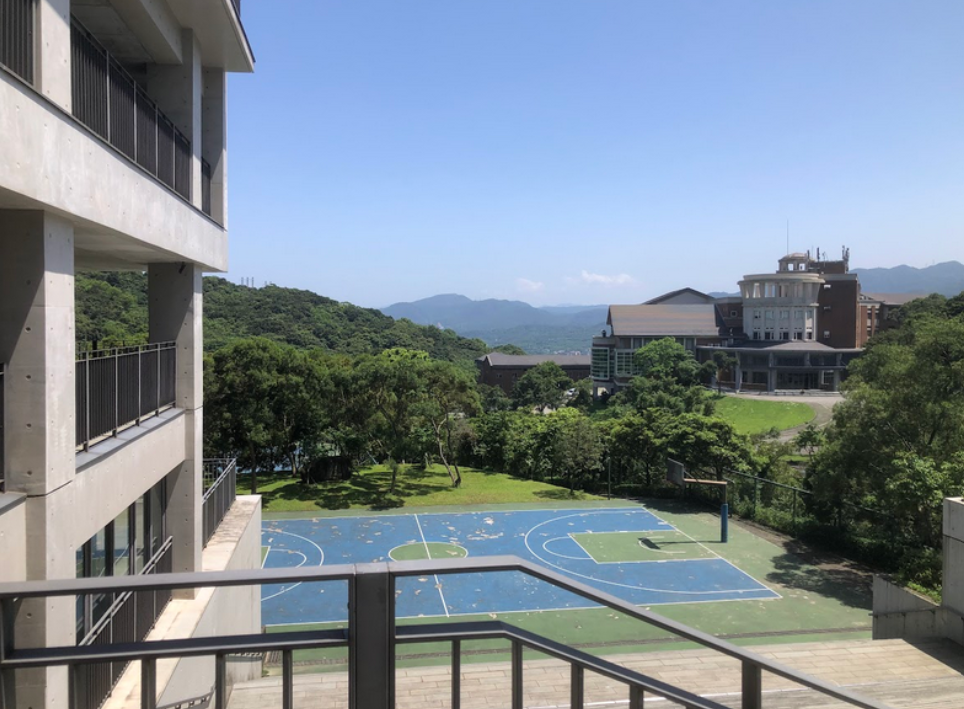
The Philosophy behind Dharma Drum Mountain’s Buddhist Environmentalism
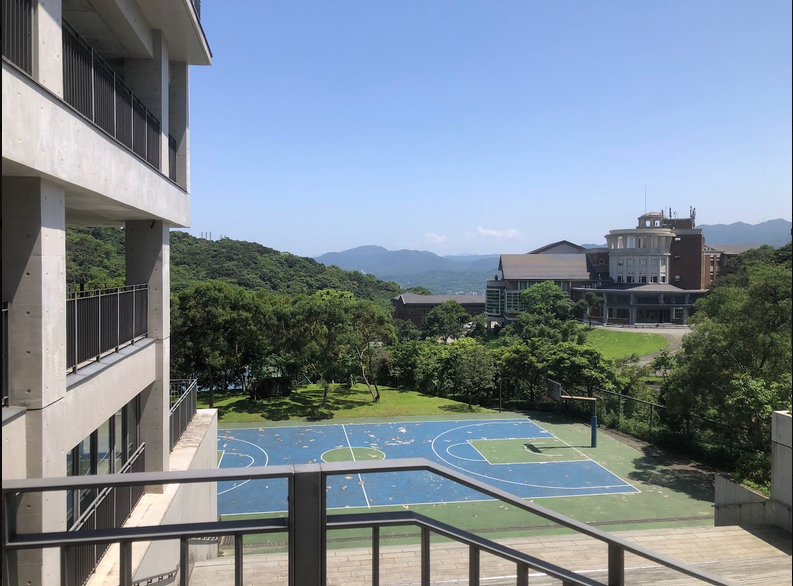
At Chan (the Chinese word for Zen) Buddhist institutions like Dharma Drum Mountain (DDM), even tasks like weeding are spiritual.
In April, I visited DDM with a group of other volunteers to weed. We weeded to create a “Pure Land” on Earth. Creating this “Pure Land” requires one to care for their four kinds of environments: their spiritual, social, living, and natural environments. To understand what this means, I will first explain how DDM conceptualizes the four environments and the Pure Land. Then, I will reflect on my experience.
Section 2: The Four Environment, The Pure Land, and The Conceptual Roots below Weeding
There are two concepts I will attempt to explain that relate to weeding at DDM: The four kinds of environments and the Pure Land on Earth.
Disclaimer: Since I am not an expert on the philosophy of DDM or Buddhism, there may be problems with the way that I interpret Master Sheng Yen’s beliefs. Nevertheless, I will attempt to explain what I understand to be true as clearly as possible.
一. Four Kinds of Environment.
Master Sheng Yen teaches that there are four kinds of environments: spiritual, social, living, and natural. Here are the differences between these environments.
1. Spiritual Environment — This is one’s own state of mind. One protects it by cultivating a pure and stable mind.
2. Social Environment- This refers to (mostly or only human) interpersonal relationships. One protects it by doing the right actions, saying the right things, and performing rituals in a way that is conscientious to the needs of society.¹
3. Living environment– This is where life lives. One protects it by living a simple life with few desires. This protects lifeforms from pollution and the excessive extraction of resources.² It also means one maintains an orderly and clean environment to promote health in communal spaces.¹
4. Natural Environment– This is Earth. We protect it by making an active effort to reduce waste, manage resources, and do things like weed.¹
Although these four kinds of environments are interconnected, their relationship is such that different environments take precedence over others. It is most important to protect one’s spiritual environment because if one’s spiritual environment is clean, then they will have the motivation to protect the other environments. Next, one should protect the social environment. When the social environment is protected, humans work together to protect the living environment. Finally, by protecting the other three environments, the natural environment can be further protected by developing concrete plans to reduce waste and heal ecosystems.³
¹Sheng Yen. (2020). Dharma Drum Mountain Global Website — About DDM.
²Shiu, H. C. H. (2023) p.10
³Shiu, H. C. H. (2023) p.11
二. Pure Land on Earth
The Pure Land has different meanings and interpretations. However, it often has played a central role in Chinese Buddhism.
Some people believe the Pure Land is a literal place one can go to after death (called the Western Pure Land). Others believe the Pure Land exists in one’s mind. Regardless, if one reaches the Pure Land, they are guaranteed to reach nirvana⁴ (the state when suffering ends. It is the goal of many Buddhists to achieve this state).
Master Sheng Yen believes in the Western Pure Land, but he also believes a Pure Land can exist in one’s mind.⁴ According to Master Sheng Yen, one can create a Pure Land in their mind if they develop a “serene state of mind.” One can create this Pure Land in their lifetime. Once one cultivates a serene mind, they will experience a “serene world,” and this “serene world” is a Pure Land.⁵
One way to experience this “serene world” is to engage in altruistic work. By doing this, you are creating a more compassionate world. For Master Sheng Yen, working to create a more compassionate world seems to be synonymous with working to build a “Pure Land” on Earth.⁴
三. Synthesizing The Concepts of The Four Environments and The Pure Land on Earth.
It seems that when one understands these two concepts, one has a clearer idea behind what motivates Master Sheng Yen and his followers. One must prioritize caring for their spirit. One does this by cultivating a serene and caring mind. If their mind is serene, then they will see the world as serene. Thus, their experience of the world will be one that is pure. Once one cultivates this type of mind, they will want to help their society by helping others. This combination of seeing the world as serene and engaging in altruistic behavior is what creates a Pure Land on Earth.
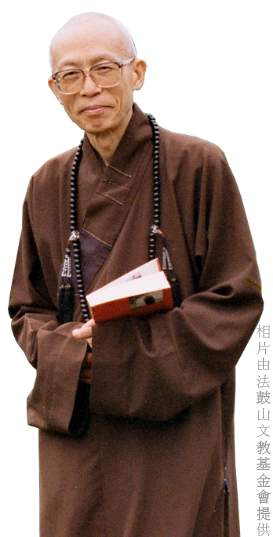
⁴ Jones, Charles B. “Master Sheng Yen’s Pure Land Teachings: Synthesizing the Traditional and the Modern.”
⁵DDMTV法鼓山網路電視台. (2019, April 11). Protecting the Spiritual Environment Dharma Drum Mountain.
Section 3: A Reflection on My Experience Weeding
Let us return to the question that this blog aims to explore: “How do different philosophies, ideologies, and religions shape the way individuals or communities interact with their society and/or environment?” It seems clear that Master Sheng Yen’s environmentalism should inspire his followers to protect the environment. However, there are many ways to protect the environment (some better than others). One reason I had wanted to volunteer at DDM was to figure out how Master Sheng Yen’s closest followers thought his environmentalism could be applied in practice.
I have learned that one way this environmentalism may manifest itself is lots of weeding. Every month, DDM buses volunteers from Taipei to DDM to weed. This is the same group of volunteers I had joined for a day.
Before we started weeding, we watched a video by DDM that talked about why practitioners should not consume meat, alcohol, or the five pungent spices (garlic, onions, scallions, chives, and leaks). I wish that I could explain the reasoning the video used to argue against eating and drinking these things, but unfortunately, the video was completely in Chinese and 我的中文不好!
Before and after the video, we chanted and bowed to the Buddha. I imagine that one reason for this is because we weed not only to protect our living and natural environments, but our spiritual environment as well.
As has been previously stated, caring for the spiritual environment takes priority over other environments. This seems true even while weeding. When I asked the lead volunteers which environments we were protecting, their first response was the Spiritual environment. If we weed to practice the Dharma (the teachings of the Buddha), then it makes sense that we would begin the activity with chants and bows.
Chan Buddhism has a long history of using daily chores and tasks as a way to practice being present in the moment. Weeding is just one task among nearly all daily chores that practitioners can use to improve their focus. By improving their attention to the present moment, it appears they also are caring for their spiritual environment.
While weeding to improve our spiritual environment seems nice, there appears to be an important question about when weeding does more harm than good. At times, it had seemed to me that we weeded rather indiscriminately. We removed nearly all plants from the soil except for some flowers and bushes. Does removing all these plants cause unnecessary harm to the creatures who live in the soil and to the plants we remove?
How do we decide when removing plants will be better for the natural environment than keeping them in the ground? Or, another way to ask this question: How do we decide what becomes a weed?
I had asked the latter question to a lead volunteer. They had a clear answer: use the app called Seek. This app tells them what plants are weeds. The volunteer had said that the plants we had removed that day would proliferate too quickly. If we had not weeded, then they would have killed all the other plants by competing for their resources.
Section 4: Conclusion
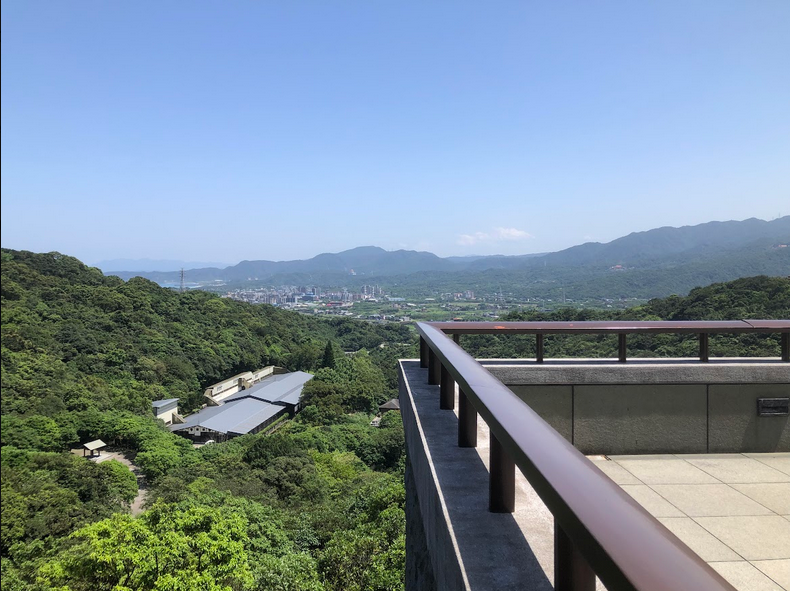
Would the Earth suffer from fewer environmental catastrophes if we all followed Master Sheng Yen’s environmentalism. Probably. It makes sense in theory that working to cultivate a present mind with simple desires and a caring attitude would be of great help to the Earth. If everyone were to weed in the way DDM weeds, would ecosystems be healthier? I don’t know. However, I feel that I do know this: I was able to use weeding to practice my focus on the present moment while appreciating DDM’s peaceful campus.
Since there seems to be an idea within Master Sheng Yen’s work (as with many other Buddhist schools) that your mind determines how you experience the world, I suspect that the tranquility one feels when one weeds may be the main reason DDM encourages the practice.
Beyond that, if Sheng Yen is correct, then beginning to develop a tranquil mind through weeding may ultimately be the best thing one can do for the planet. This is because if he is correct, then caring for the spiritual environment may be the best or only way to know how one should care for the natural environment. Nevertheless, my gratitude extends to DDM’s lovely volunteers for letting them come along with them to weed and ask questions.
References
DDMTV法鼓山網路電視台. (2019, April 11). Protecting the Spiritual Environment Dharma Drum Mountain. YouTube. https://www.youtube.com/watch?v=841TEFisOR0
Jones, Charles B. “Master Sheng Yen’s Pure Land Teachings: Synthesizing the Traditional and the Modern.” 聖嚴研究 (Studies on Master Sheng Yen) 11 (2019): 217–41.
Sheng Yen. (2020). Dharma Drum Mountain Global Website — About DDM. Dharmadrum.org. https://www.dharmadrum.org/portal_b8_cnt.php?folder_id=16
Shiu, H. C. H. (2023). The Fourfold Environmental Protection Initiative of Dharma Drum Mountain. Religions, 14(12), 1–14. https://doi.org/10.3390/rel14121509
Hi, this is a comment. To get started with moderating, editing, and deleting comments, please visit the Comments screen in…

Leave a Reply