Taipei has some of the most vegetarian restaurants per capita in East Asia. What ideas motivate taipei’s restaurant owners?
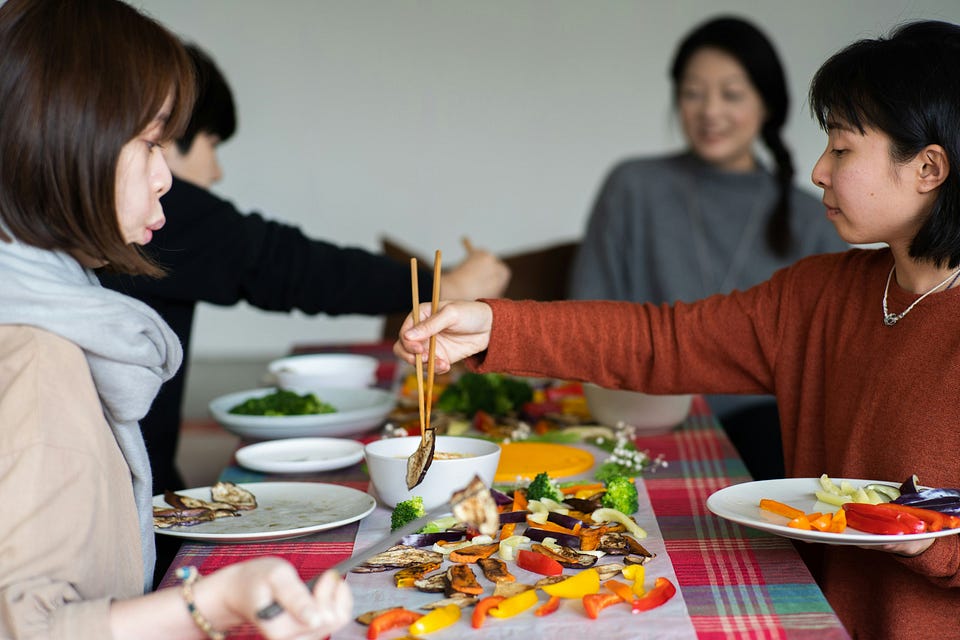
Plant based diets seem to benefit human health¹, environmental health², and the wellbeing of animals in many ways. For this reason, it seems that any person or ideology that encourages plant based eating has the potential to make a strong positive impact. The purpose of this blog series, “Ideodyssey,” is to investigate how different ideas impact individuals and communities. According to Happy Cow, there are over 500 vegetarian or vegan restaurants in the Taipei/New Taipei metro area. Since I live in Taipei, I want to explore why so many Taipei restaurant owners (laobans 老闆) decide to serve only vegetarian or vegan food. To investigate, I have talked to three different vegetarian restaurant laobans.
Since there are over 500 vegetarian restaurants, it has been difficult to decide which three restaurants I should ask. Ultimately, I have decided to survey three restaurants who have significant differences between their cuisine, very delicious food, and are willing to converse with me. These three restaurants are Laishin Vegetarian (來欣素食手工水餃), Three Idiots Toast and Curry (三個傻瓜印度蔬食餐廳), and Yu Gui Ren Vegetarian Buffet (玉貴人蔬食). Since these restaurants have exceptional food and service, I recommend anyone to visit them if they find themselves in Taipei. I will now provide a brief description of each restaurant, what makes them great, what motivates the restaurants’ laobans to exclude meat, and explore some of the ideas behind their motivations.
- Hemler & Hu (2019); Key et al. (2021); Medawar et al. (2019)
- Carey et al. (2023); Hemler & Hu (2019)
1. Laishin Vegetarian (來欣素食手工水餃)
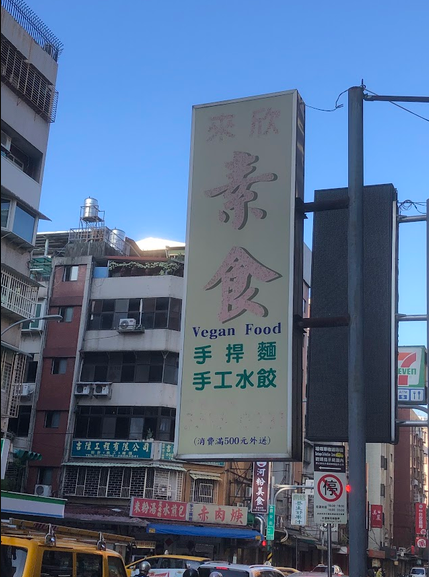
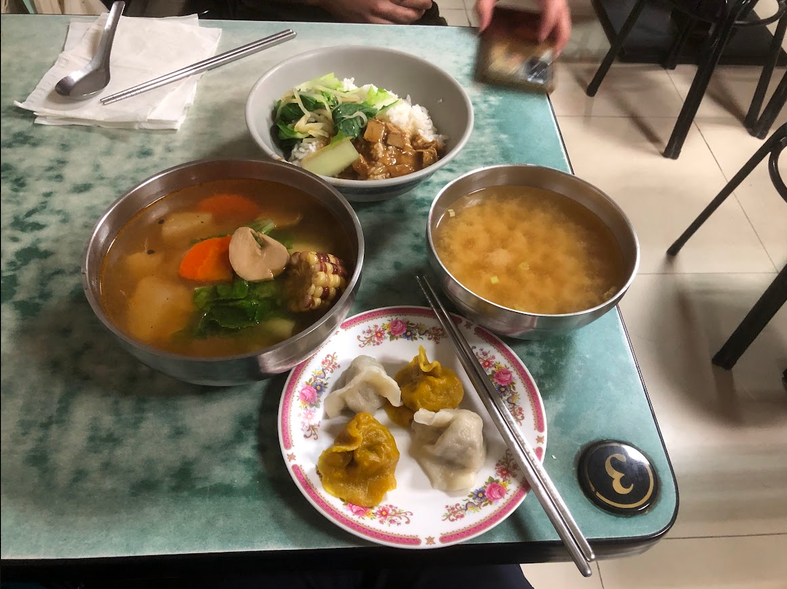
I recommend anyone who is in Taipei to eat at Laishin Vegetarian. I think that the restaurant has the best vegetarian Shuijiao dumplings and noodle dishes in the city. Some of their dumplings and noodles are homemade. I find the texture of these dumplings and noodles to be very nice. Furthermore, unlike many restaurants in Taipei, their soups often do not have too much oil, which makes them easier to digest. Everything on the menu is vegan.
The laoban (store owner) is a delightful character. For those who cannot speak Chinese, she speaks very good English and is happy to offer recommendations. Given the quality of this authentic, little Taiwanese restaurant, I have wanted to ask her what motivates her to serve vegetarian food.
Why is Laishin a Vegan Restaurant
The laoban explained to me that her mother had started the business. Originally, her mother’s restaurant was vegetarian for religious reasons. Her mother had been a member of a religious group called the Yiguangdao. A major characteristic of this group is vegetarianism.
After her mother had passed, the laoban had wanted to keep the family business alive. She continues to serve vegan food because she believes it is better for one’s health, the environment, and animal welfare.
Prior to my conversation with the laoban, I had never heard of the Yiguangdao. However, I have since learned that this religion is the reason for many vegetarian restaurants in Taiwan.
Who are the Yiquangdao
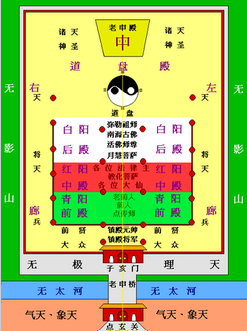
The Yiguangdao trace their spiritual lineage back to the start of Chinese folk religion; however, the term has only been used since 1886. Although the group had been small, they grew much larger during the Chinese civil war in the 1930s. Some Scholars categorize the Yiquangdao as a Buddhist group, while others categorize it as a form of Chinese folk religion. Nevertheless, the group uses Buddhist, Confucian, and Taoist texts to affirm their beliefs.³
The Yiguangdao believe all religions stem from a Chinese concept known as “the Dao” (often translated as the way). While different conceptualizations of the Dao exist, the Yiguangdao personify the Dao to be a supreme deity. If I understand the beliefs of the Yiguangdao correctly, they personify this deity as the Venerable Eternal Mother. Group members often believes that the Earth is nearing an apocalypse. The only way to save ones’ self from the destruction of the apocalypse is to reunify oneself with the Venerable Eternal Mother (either in this life or a next life).⁴
If my understanding is right, then being ethical is a necessary condition to save oneself. Since the Yiguangdao seem to want to save humans from the destruction of the apocalypse, a central pillar of their faith is to advocate ethical conduct.⁴ While the Yiquangdao have many ethical beliefs that come from Buddhist, Daoist, and Confucian texts, vegetarianism seems essential to their ethical life. Although the Yiguandao have first used arguments from religious or Confucian texts to justify vegetarianism, they have continued to develop new arguments. Since the 1980s, scientific research that purports the health and environmental benefits of vegetarianism have become part of Yiguangdao preachings and publications.⁵
The Impact of Yiguangdao on Vegetarianism in Taipei
The impact of the Yiguangdao on vegetarianism in Taipei appears significant. Available data suggests that, in the 1970s, 90% of vegetarian restaurants in Taipei had been run by Yiguangdao members. By the early 21st century, it is estimated that the percentage has dropped to 66%.⁵ However, this decline appears to be not because the Yiguangdao has fewer restaurants. Instead, it seems that it is because the number of vegetarian restaurants that have opened for secular reasons has increased.⁶
Yiguangdao beliefs have seemed to inspire many people to open vegetarian restaurants and eat vegetarian food. This includes the current laobans’ mother at Laishin Vegetarian. Due to the positive impact of vegetarianism on health, the environment, and animal welfare, it seems that one can conclude that the beliefs of the Yiguangdao have led to positive consequences both in Taipei and around the world.
3. Billioud, Sebastien (2020).
4. Lim, F. K. G. (2012).
5. Broy, N. (2024).
6. Lopez, G. S. (2026).
2. Three Idiots Toast and Curry (三個傻瓜印度蔬食餐廳)
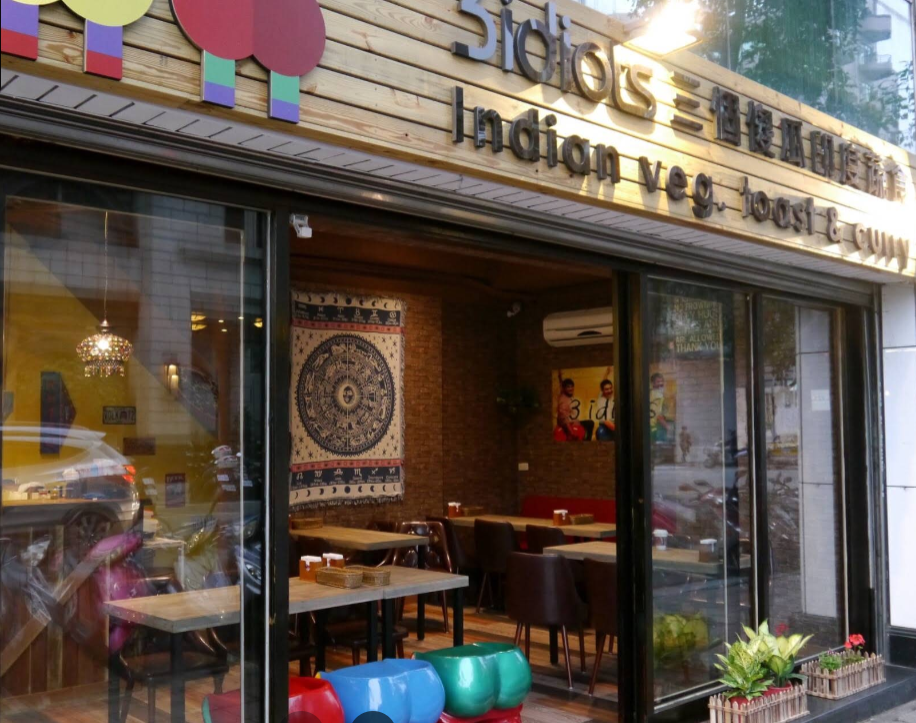
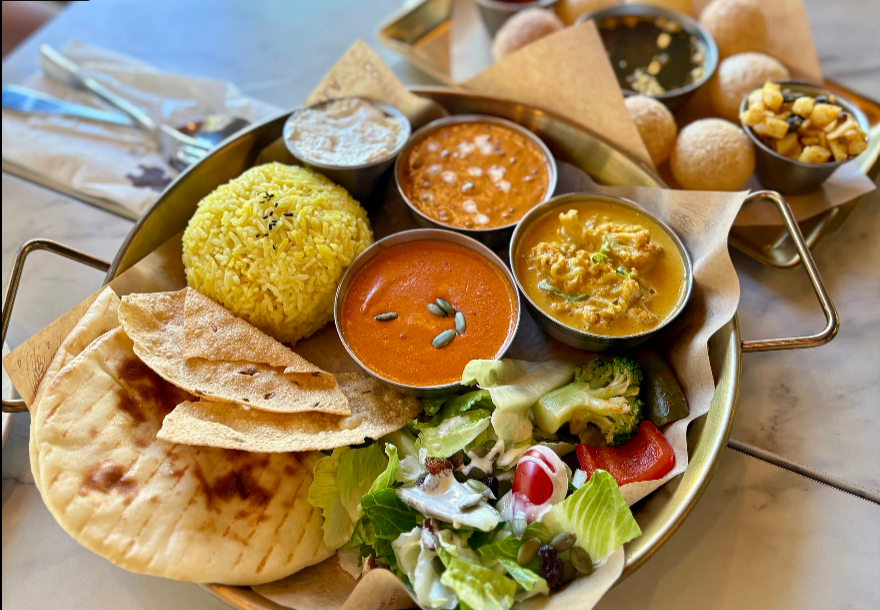
Three Idiots needs no introduction. It is a famous restaurant among locals and is named after a Bollywood film that has a cult following across Asia. Compared to the other two restaurants I survey here, it seems the most unique. It is both the only upscale restaurant and it is the only restaurant to serve non-Taiwanese food. The restaurant has a cozy atmosphere and delicious food. For expats in Taipei missing Indian food, there is no better place to visit. Another unique aspect to this restaurant is its basement. The basement is home to Taipei’s only Hindu temple.
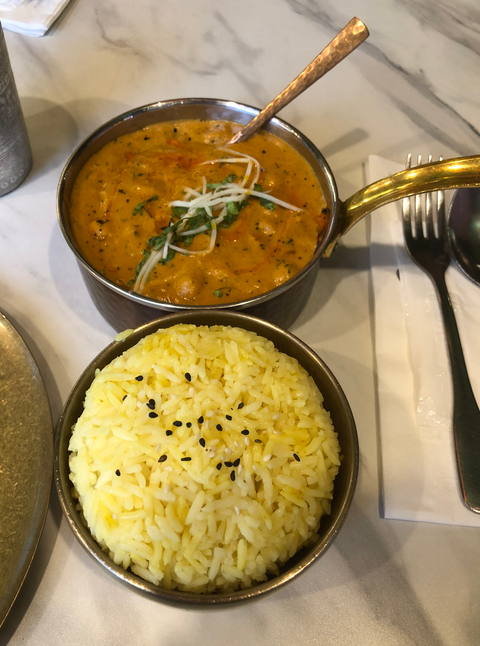
Why is Three Idiots Vegetarian?
According to the restaurant’s manager, the owner runs numerous Indian restaurants in Taipei. Three Idiots is unique because it is the only vegetarian restaurant he owns. However, since it is common for many Indians to eat vegetarian, he has felt there is a need to have an Indian restaurant that serves only vegetarian food. Although there appear to be many explanations about why large numbers of Indians are vegetarian, the manager has seemed to focus on one reason in particular: Many Indians abstain from meat because it leads to aggression.
According to the manager, the consumption of meat, especially red meat, leads to aggression. This has led to a taboo where some Indians feel uncomfortable marrying into a family where a close family member eats red meat. While this may seem superstitious, some research does suggest that there is a possible link between aggression and the consumption of red meat. However, Currently, there does not seem to be enough data to draw a firm conclusion.⁷
Nevertheless, India has the highest percentage of vegetarians in the world. If the belief that meat, and particularly red meat, leads to aggression, causes a large swath of the population to avoid red meat, then perhaps there is a practical benefit to believing that meat makes one aggressive.
7. Bano, R., & Zafar, I. (2025); Gupta et. al. (2024); Sathyamala, C. (2018); Taft, C. (2023); Zand, H. (2025).
3. Yu Gui Ren Vegetarian Food (玉貴人蔬食)
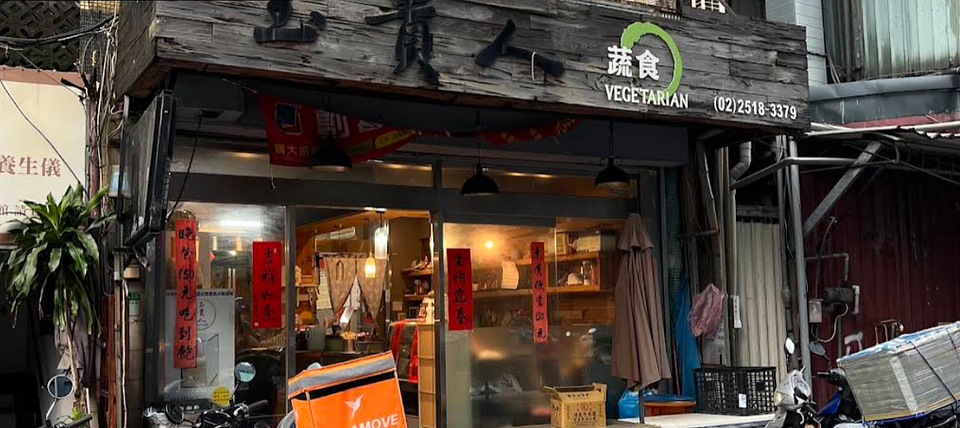
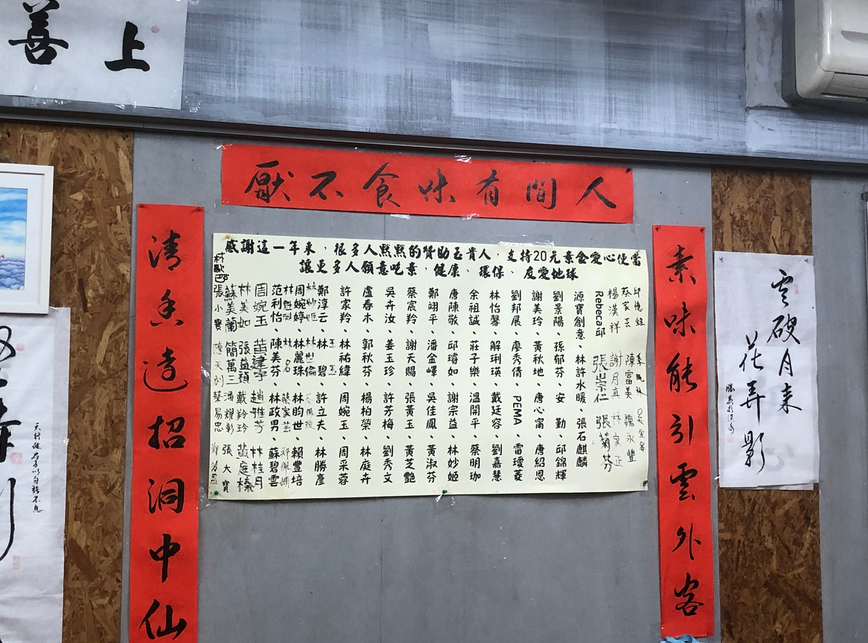
The third restaurant I have surveyed is one of the most common types of restaurants in Taipei: a vegetarian buffet. Yu Gui Ren Vegetarian Food is my favorite buffet in the city. Compared to some other vegetarian buffets, the food at this buffet has less oil (which given how oily some of the buffets can be, I think is a very good thing!) Additionally, I find the restaurant serves a variety of delicious dishes. The buffet also serves purple rice, a healthier and tasty alternative to white rice. The laoban of the restaurant is also extremely generous. He allows you to continue to refill your plate for no additional cost if you pay 180 Taiwanese Dollars (about 5 US dollars) at dinner time. This makes the buffet much more affordable than others if you want to eat lots of food.
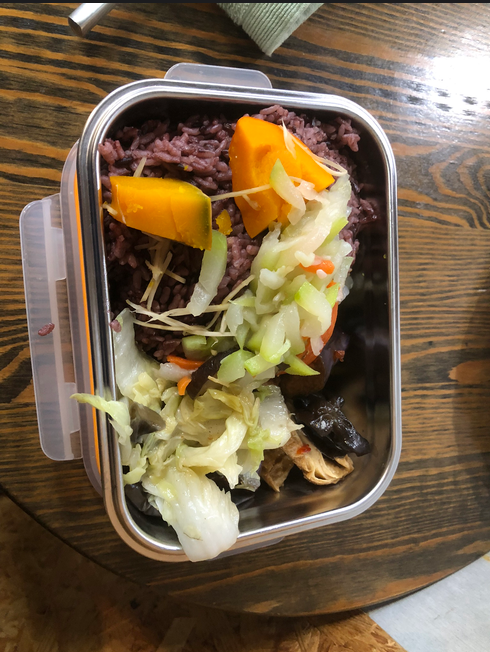
Why is Yu Gui Ren Vegetarian?
Yu Gui Ren has the most straightforward answer as to why they are vegetarian: “動是我們的兄弟姊妹我們是一家人。” In English, this roughly translates to “animals are our brothers and sisters, we are all one family.” Due to this Kindred relationship the laoban believes we have with non-human animals, he says he wants to make vegetarian food more popular. This is why he owns a vegetarian restaurant.
Indeed, from an evolutionary perspective, non-human animals are our relatives. Although it seems rare for people to think in this way, if we begin to expand who we see as family to non-human animals, then would it encourage more people to eat a vegetarian or vegan diet? In the case of this laoban, the answer is yes.
I think this makes intuitive sense: by viewing non-human animals as relatives, we expand our circle of moral consideration; and by extension, stop harming them for the sake of our dietary preferences. If we care about our family, and we see non-human animals as part of our family, then why would anyone want to kill non-human animals. Perhaps, this belief that non-human animals are part of our family could be one way to encourage more people to adopt a plant based diet. Certainly, for Yu Gui Ren’s laoban, it seems to be enough to encourage him to dedicate his livelihood to the cause.
Conclusion
Since Taipei is home to some of the most vegetarian restaurants per capita in East Asia, it raises the question of what ideas, ideologies, or religions inspire vegetarian restaurant owners to operate a vegetarian business. There appear to be as many reasons for Taipei’s restaurants being vegetarian as there are kinds of vegetarian restaurants: The desire to save people from an apocalypse, the desire to avoid aggression, the belief that non-human animals are part of humanity’s larger family, environmental, and health concerns. Regardless of why someone runs a vegetarian restaurant, it seems clear that the ideas that motivate people to open vegetarian restaurants can benefit the health and environment of communities.
References
Bano, R., & Zafar, I. (2025). From Plate to Personality: Correlation Between Diet and Aggression Among Indian Male Respondents [Review of From Plate to Personality: Correlation Between Diet and Aggression Among Indian Male Respondents]. Cureus. https://doi.org/10.7759/cureus.93466
Billioud, Sebastien (2020). Reclaiming the Wilderness: Contemporary Dynamics of the Yiguandao. Oxford and New York: Oxford University Press.
Broy, N. (2024). Care of the Self or Pursuit of a Better World? The Transformation of Vegetarianism in Yiguandao Discourses from the Late Qing Period to the Global COVID-19 Pandemic. Twentieth-Century China, 49(3), 233–253. https://doi.org/10.1353/tcc.2024.a938048
Carey, C. N., Paquette, M., Sahye-Pudaruth, S., Dadvar, A., Dinh, D., Khodabandehlou, K., Liang, F., Mishra, E., Sidhu, M., Brown, R., Tandon, S., Wanyan, J., Bazinet, R. P., Hanley, A. J., Malik, V., Sievenpiper, J. L., & Jenkins, D. JA. (2023). The Environmental Sustainability of Plant-Based Dietary Patterns: A Scoping Review. The Journal of Nutrition, 153(3). https://doi.org/10.1016/j.tjnut.2023.02.001
Gupta, Pratham & Jagrati, Kumari & Choubey, Shambhavi & Garg, Vidushi. (2024). Exploring the Relationship Between Diet and Aggressiveness: A Focus on Non -Vegetarian Consumption.. 10.13140/RG.2.2.10894.16962.
Hemler, E. C., & Hu, F. B. (2019). Plant-Based Diets for Personal, Population, and Planetary Health. Advances in Nutrition, 10(Supplement_4), S275–S283. https://doi.org/10.1093/advances/nmy117
Key, T. J., Papier, K., & Tong, T. Y. N. (2021). Plant-based Diets and long-term health: Findings from the EPIC-Oxford Study. Proceedings of the Nutrition Society, 81(2), 1–9. https://doi.org/10.1017/s0029665121003748
Lim, F. K. G. (2012). The Eternal Mother and the State: Circumventing Religious Management in Singapore. Asian Studies Review, 36(1), 19–37. https://doi.org/10.1080/10357823.2011.651442
Lopez, G. S. (2026). Foodscapes of Civil Society: Veg*n advocacy and sustainability transitions in the Sino-cultural sphere [Review of Foodscapes of Civil Society: Veg*n advocacy and sustainability transitions in the Sino-cultural sphere ]. Lund University.
Medawar, E., Huhn, S., Villringer, A., & Veronica Witte, A. (2019). The effects of plant-based diets on the body and the brain: A systematic review. Translational Psychiatry, 9(1). https://doi.org/10.1038/s41398-019-0552-0
Sathyamala, C. (2018). Meat-eating in India: Whose food, whose politics, and whose rights? Policy Futures in Education, 17(7), 878–891. https://doi.org/10.1177/1478210318780553
Taft, C. T., Hamilton, E. G., Leviyah, X., Gnall, K. E., & Park, C. L. (2023). Animal Consumption Associated with Higher Intimate Partner Aggression. Journal of Family Violence, 39(8), 1539–1543. https://doi.org/10.1007/s10896-023-00556-0
Thomas Bird. (2024, May 29). Taipei Vegetarian 101. Taipeitimes.Com; 台北時報. https://www.taipeitimes.com/News/feat/archives/2024/05/30/2003818598
Zand, H. (2025). To Eat or Not to Eat Red Meat? What the Science Says [Review of To Eat or Not to Eat Red Meat? What the Science Says]. Psychology Today. https://www.psychologytoday.com/us/blog/the-behavioral-microbiome/202505/to-eat-or-not-to-eat-red-meat-the-science-responds