How One Indonesian Hopes an English Summer Camp Is The Answer to Conserving Sumatra’s Forests
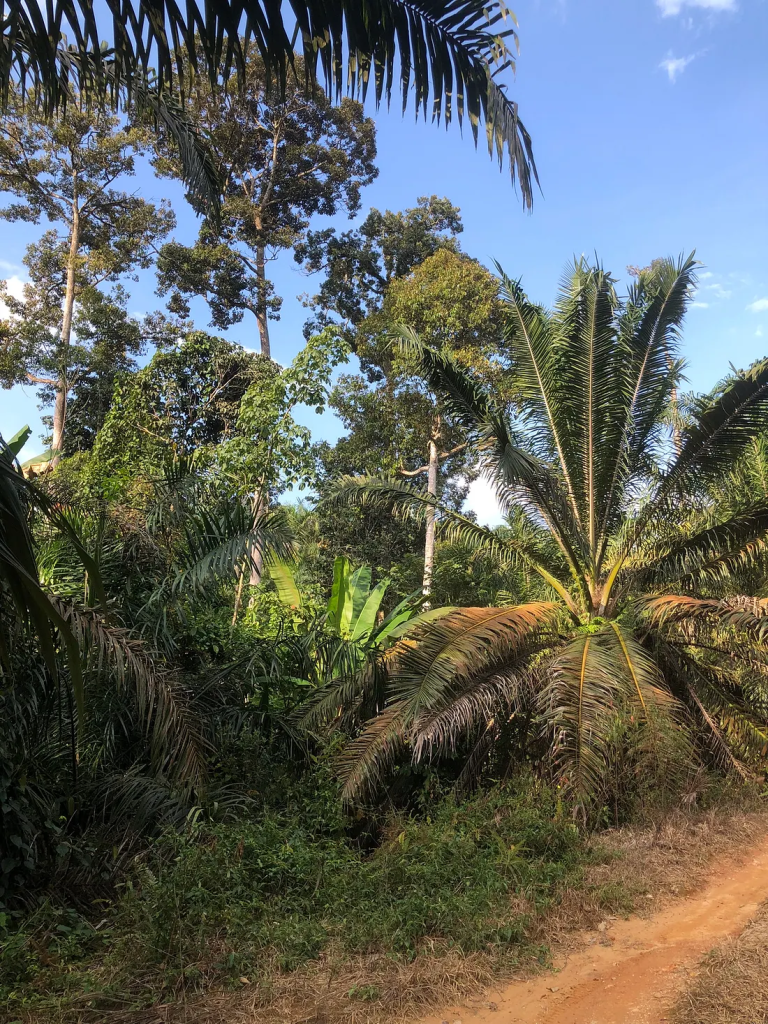
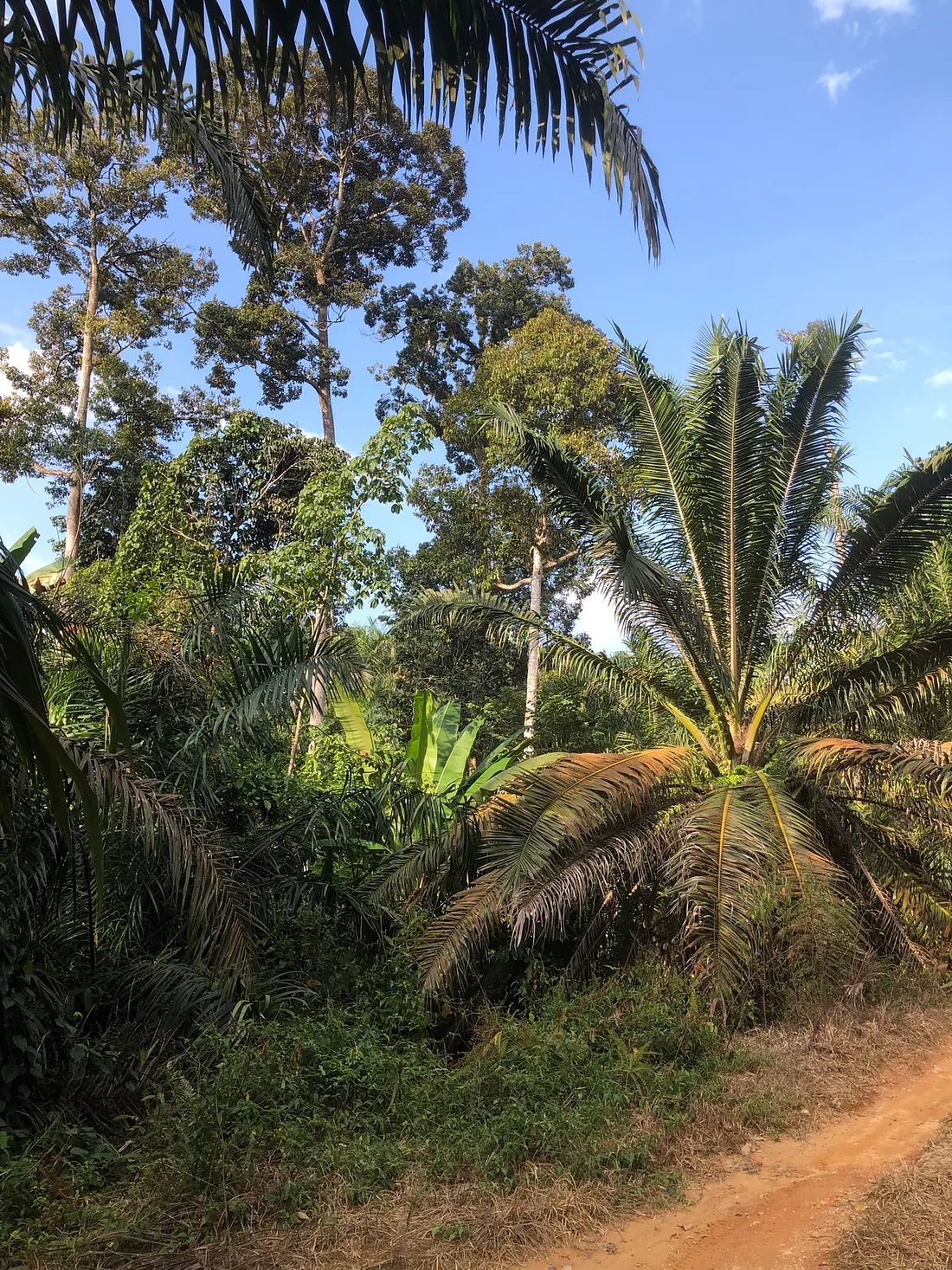
Sumatran Rain Forest with Oil Palm and Durian Trees
I have never thought that teaching English could be a way to protect rain forest. Nevertheless, this is one Indonesian’s strategy to conserve the wildlife around his village.
When I had first heard about Wisno’s “green project,” I thought it might be an interesting topic for this blog. Using English teaching for conservation seems unique. In a region that experiences the second highest rate of tropical deforestation in the world,¹ unique ideas may be what is necessary to save the forests. However, while I have been interested to learn about how Wisno uses English to protect forest, I also want to focus on the question this blog attempts to explore: “How do different philosophies, ideologies, and religions affect communities, and how do they inform how individuals act?”
In Wisno’s context, it seems that exploring this question requires understanding his motivations. For this reason, the question I will attempt to answer here is why Wisno has decided to use English teaching to conserve forest. What are the underlying philosophies, ideologies, or beliefs that have motivated him? Similar to Mr. Ger in my last post, Wisno’s inspiration does not appear to stem from any ideology or philosophy. Instead, Wisno says he is working to create his “green project” for two reasons: he cares about the rain forest and he cares about his community.
Wisno’s Early Life
To explore the question of why Wisno wants to save the rain forest by teaching English, one must first understand the history behind his “green project” and what the project aims to do.
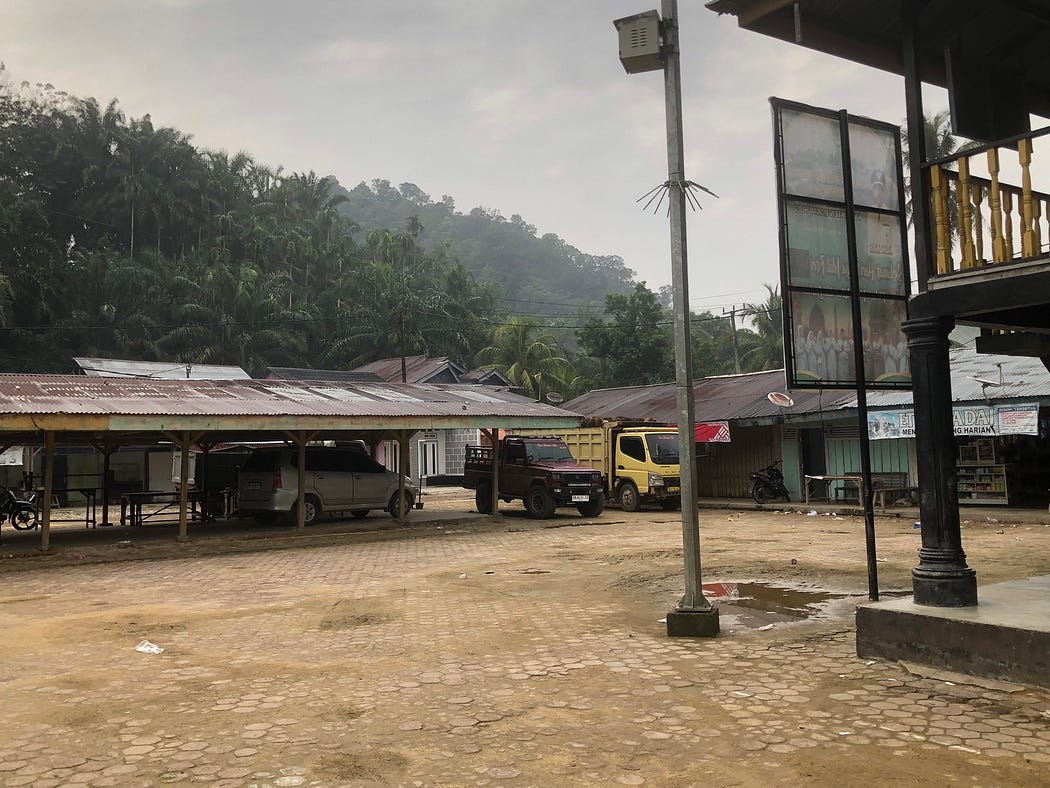
Wisno had grown up in the small Indonesian village of Pemandang on the island of Sumatra. In his childhood, the only connection between his village and the rest of civilization had been a small ferry boat that roared up the river to his village. In Junior High School, he took the boat to the big city of Pekanbaru. Here he had lived with his cousin to attend a better school.
Although he has lived in Pekanbaru ever since, he has maintained strong ties to his village. From a distance, he has watched his village change. Since 2000, a dirt road has connected his village with the rest of Sumatra. While the road itself has been a big change, the impact of introducing palm oil might have had a more significant impact to the life of the average villager.
According to Wisno, until around the year 2000, most villagers, including his parents, made a profit from rubber farming. Today, most villagers make money from palm oil. Some studies indicate that rubber plantations can support greater biodiversity than oil palm plantations.² Wisno affirms this. He claims that as villagers have transitioned away from rubber, plant and animal species have begun to move away from the area.
However, in addition to the way oil palm harms biodiversity, the bigger problem might be the way in which oil palm is grown. Wisno says that the rubber plantations of the past are smaller than today’s palm oil plantations. Since many palm oil plantations are owned by large companies, they have acquired large swaths of land for the sole purpose of cultivating palm oil. To make room for the palm oil plants, the land they acquire is often burned.
While Wisno had watched the destruction of his village’s forests from afar, he was trying to make a living as an economics professor in Pekanbaru. Since he studied English from a young age, he decided to open a private English language course as an additional source of revenue.
- Dixon, Kathryn Devon, “Indonesia’s Palm Oil Expansion & Further Contribution to Economic Fragility” (2016). P. 19
- Fitzherbert, E, M Struebig A Morel, et al. 2008. “How Will Oil Palm Expansion Affect Biodiversity?” P. 5
Sumatra’s Deforestation
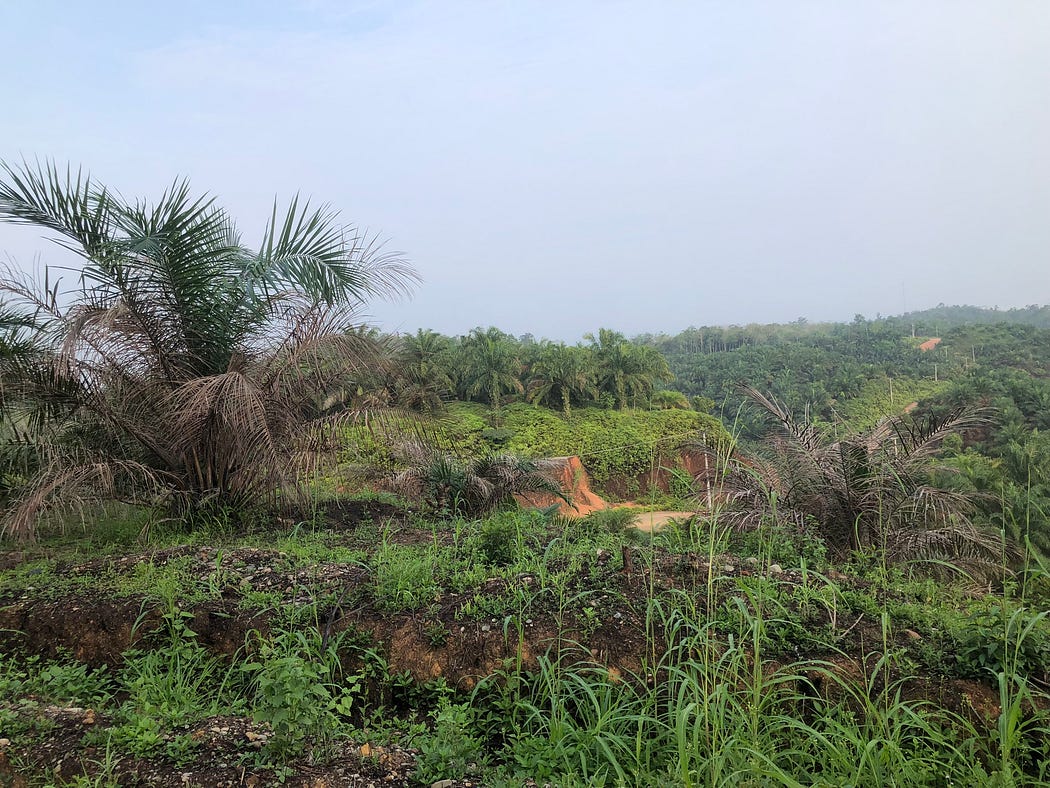
In 1983, government policies encouraged the growth of Indonesia’s palm industry by incentivizing companies with loans and free land. Since that period, deforestation has continued.³ One study using satellite imagery estimates that in 2001, about 33 percent of Sumatra had been rain forest. By 2019, that number appears to drop to only 25 percent.⁴
In addition to palm oil’s ecological impact, it has also dispossessed many villagers from their land. Large agribusiness companies have better technology and more capital than small land owners. These advantages enable them to be about twice as productive, encouraging the expansion of large agribusiness at the expense of small farmers.
Although these companies often obtain land through legal means, they sometimes use illegal and violent tactics to cease it. In 2011, for example, a large producer named BRIMOP raided a village of 83 families. They destroyed homes with bulldozers and ceased property.⁵
I have heard of no such violent incidences occurring in Wisno’s village. Instead, Wisno laments that many people have sold their land for money. While Wisno sees this decision to sell as a poor long-term economic strategy, he appears to understand why people want money now at the expense of the money they could make in the future by keeping their land. Having money to send children to a better school, for instance, is a common reason Wisno says people sell their land.
Wisno estimates that about 70% of palm oil plantations in Sumatra are operated by large agribusiness corporations. This estimate seems to align well with the estimate of some researchers who believe that about 64% of palm oil producers in Indonesia (not just Sumatra) are large companies.⁶ Despite this, even if more small land owners keep their property, it may fail to solve the problem of Sumatra’s deforestation. This is because farmers can harvest palm oil twice per month and it sells for a high price. This incentivizes even small land owners to cut down more trees to grow more palm. Perhaps this is why Wisno says that even the villagers who have grown rubber in the past still often decide to burn everything to cultivate palm oil.
3. Dixon, Kathryn Devon, “Indonesia’s Palm Oil Expansion & Further Contribution to Economic Fragility” (2016). P. 7–8
4. Gaveau, David L. A., Bruno Locatelli, Mohammad A. Salim, et al. 2022. “Slowing Deforestation in Indonesia Follows Declining Oil Palm Expansion and Lower Oil Prices.” P. 7
5. Dixon, Kathryn Devon, “Indonesia’s Palm Oil Expansion & Further Contribution to Economic Fragility” (2016). P. 29–30
6. Gaveau, David L. A., Bruno Locatelli, Mohammad A. Salim, et al. 2022. “Slowing Deforestation in Indonesia Follows Declining Oil Palm Expansion and Lower Oil Prices.” P. 7
Note: Although palm oil counts for the largest share of deforestation in Sumatra, some researchers believe it only accounts for 23% of deforestation between 2001 and 2016. Wildfires and timber plantations were the second and third largest causes of deforestation respectively. Read Austin, Kemen G, Amanda Schwantes, Yaofeng Gu, and Prasad S Kasibhatla. 2019. “What Causes Deforestation in Indonesia?” to learn more.
Wisno’s Green Project
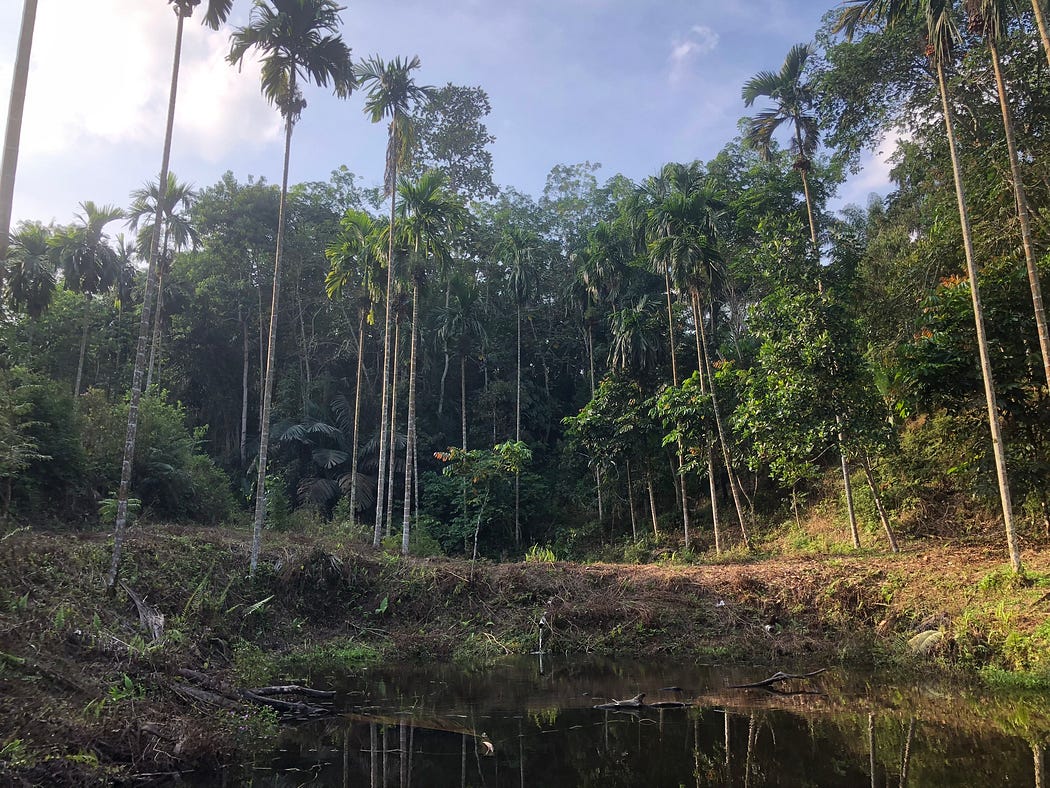
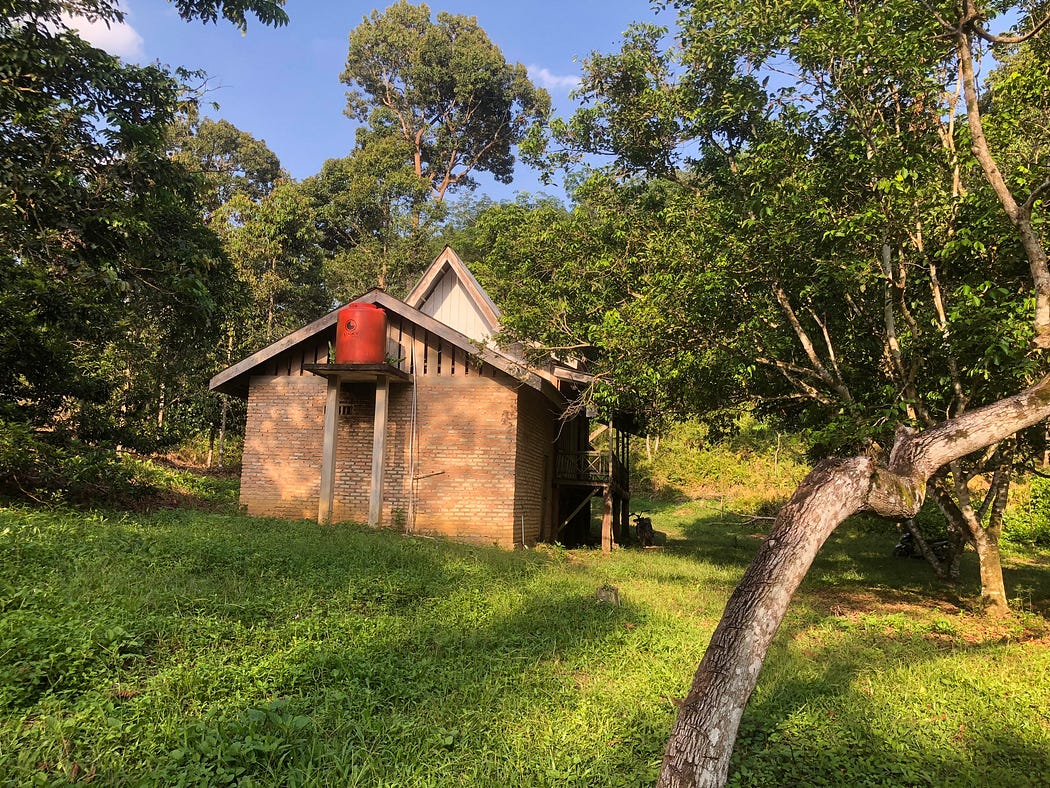
Wisno wants to give his village the opportunity to invest in their future without destroying the forest or selling their land. To conserve some of his villages’ wildlife, he has been buying small parcels outside his village since 2000. The total sum of these parcels is now 15 hectares. He hopes this land can do two things: give new economic opportunities to his village and show them that there are ways to profit from the land without burning it.
He hopes to transform his property by turning it into an English language learning camp. In this setting, people will come to his property to stay the night and participate in activities that relate to learning English. These activities may include learning to cook in English, learning the names of local plants in English, and English conversation lessons.
To make a profit, he plans to charge students who come from the city. Since these students often have greater access to financial resources, they can afford to pay. By bringing people from wealthier parts of the country, it allows Wisno to demonstrate how others can use their land to attract people (and the money they bring) from elsewhere.
Nonetheless, to retain his mission of helping those in his village learn a skill that can grant them greater opportunities in the future, he plans to make his lessons free for all students who live near his village. In Indonesia, English is a skill that many high paying jobs require. By providing a pathway to those who wish to learn English, he also provides a pathway to jobs they could never hope to receive otherwise.
To further connect his village, he wants to have teachers from foreign countries. This, he hopes, will allow students to have a broader understanding about the world around them. It will also give them the experience to interact with people whom they have never interacted with in the past. While it seems his plan provides benefits to his village, there is still the question about why he cares to bring these particular benefits.
Religion as a Motivation?
The purpose of “Ideodyssey” is to explore how ideas, ideologies, religion, or political beliefs affect communities and their environment. For this reason, I have wanted to investigate Wisno’s motivations behind his “green project.”
When I had first talked with Wisno, I had wondered whether there was a religious ideal behind his project. He often used religious language to describe his feelings about the forest. He has expressed his belief that animals are a “gift from God.” “It is a blessing,” he says, “to have animals on your property.”
Like most Sumatrans, Wisno practices Islam. He prays five times a day, attends Friday worship, and abstains from Haram (forbidden) activities like eating pork. Due to the large role religion plays in his life, and the language he has used to describe the forest, I had thought it seemed probable that some of his motivations stem from his religion.
I had begun to think it was even more likely that Islam was one of his motivations after he explained his thoughts about large palm oil corporations. He has lamented that he believes the large palm oil plantations are greedy. They do not need all the money they make from their large acres of land. This, he believes, goes against teachings in the Quran that instruct practitioners to avoid greed.⁶
However, despite his sentiments about animals and greed, Wisno tells me religion is not what motivates him. While Wisno admits he sees connections between his religion and his project, he makes it clear that the reason he wants to open his English Camp is to protect the forest and give his village new economic opportunities. It seems that these two reasons are sufficient reasons on their own for starting an English summer camp. Hence, there appear to be no underlying ideas that make him want to complete his project. Rather, it seems he only wants to protect his rain forest and community because he believes they have value on their own.
6. There appear to be various passages in the Quran that one could interpret as condemning greed. Perhaps, one of the best known examples is it’s condemnation of usury (lending interest at a higher rate):
Quranic passage [30:39]: “The usury that is practiced to increase some people’s wealth, does not gain anything at GOD.”
Other passages in the Quran that seem to disapprove of greed appear; especially in Chapter 2, called “The Heifer” in English, and Chapter 4, called “Women.”
The Value of The Land and The Community
Wisno has reminded me that his profile on Workaway actually lists the two reasons why he is working to build an English Camp in his village. “I dream of running this green project for 2 very important reasons: First, to give understanding to the local community to stop selling out their land to create palm oil plantations, which is harmful to the environment. And Second, to create better opportunities for my students… to gain greater access to jobs in the global community.” The two reasons he lists here seem to correlate with the two reasons he tells me motivates his project: to protect the forest and provide his community with new economic opportunity.
According to Wisno, although he can connect Islam to his project, it is not the reason why he does his project. No underlying reasons appear to motivate him beyond his desire to protect the rain forest and provide economic opportunity to his village. For Wisno, these two reasons appear to be good on their own.
Work Cited
Austin, Kemen G, Amanda Schwantes, Yaofeng Gu, and Prasad S Kasibhatla. 2019. “What Causes Deforestation in Indonesia?” Environmental Research Letters 14 (2): 024007. https://doi.org/10.1088/1748-9326/aaf6db.
Dixon, Kathryn Devon, “Indonesia’s Palm Oil Expansion & Further Contribution to Economic Fragility” (2016). Senior Projects Spring 2016. 239. https://digitalcommons.bard.edu/senproj_s2016/239
Fitzherbert, E, M Struebig A Morel, et al. 2008. “How Will Oil Palm Expansion Affect Biodiversity?” Trends in Ecology & Evolution 23 (10): 538–45. https://doi.org/10.1016/j.tree.2008.06.012.
Gaveau, David L. A., Bruno Locatelli, Mohammad A. Salim, et al. 2022. “Slowing Deforestation in Indonesia Follows Declining Oil Palm Expansion and Lower Oil Prices.” PLOS ONE 17 (3): e0266178. https://doi.org/10.1371/journal.pone.0266178.
Jayathilake, H M, Jamaludin, J, De Alban, J D T, Webb, E L & Carrasco, L R 2023, ‘The conversion of rubber to oil palm and other landcover types in Southeast Asia’, Applied Geography, vol. 150, 102838. https://doi.org/10.1016/j.apgeog.2022.102838