How do Taiwanese honor the dead and what are their beliefs about the afterlife?
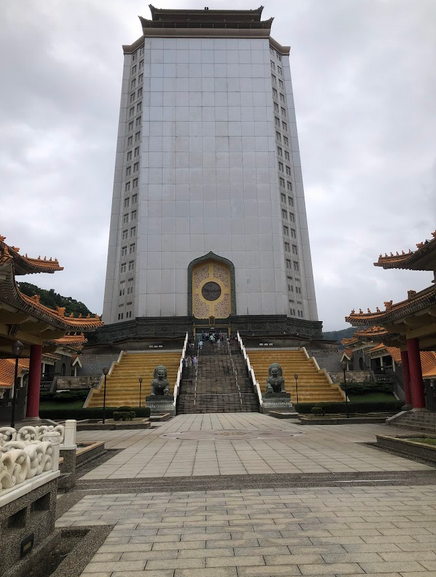
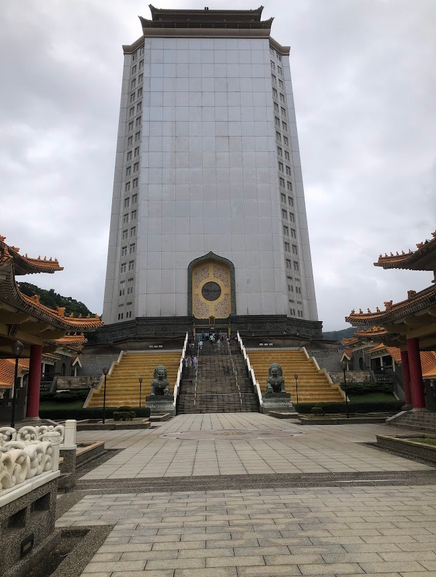
True Dragon Temple (龍巖真龍殿); The tallest columbarium in the world!
Last month, I saw people burning stacks of paper money and lighting firecrackers at gravesites. This was because it was Qingming Festival (better known in English as Tomb Sweeping Day). To my readers from the United States, this holiday has similarities to memorial day. While Qingming festival has a long history with a diverse set of traditions, the main reason people seem to celebrate it today is to honor the dead.
For the past 10 months, I have been living in Taiwan as an English teacher. Since I have been eager to learn about how different ideas affect Taiwanese people and society, I have used the Qingming festival to gain insight into the practices and beliefs about everyone’s favorite subject- Death!
I visited gravesites, the largest Columbarium in the world, and interviewed my colleagues to learn how Taiwanese conceptualize the afterlife and the common rituals used to honor the dead. My visits and inquiries have led me to conclude that although Qingming festival is a day when people often visit deceased family members to conduct rituals, different Taiwanese have many different beliefs about the afterlife, and they may adjust their rituals depending on these beliefs.
Disclaimer: Although I visited a columbarium and gravesite, I did not take photos of grave sites, people conducting rituals, and kept my distance from people to show respect for the culture and the dead. For this reason, my photos may fail to capture some of the sights I had seen.
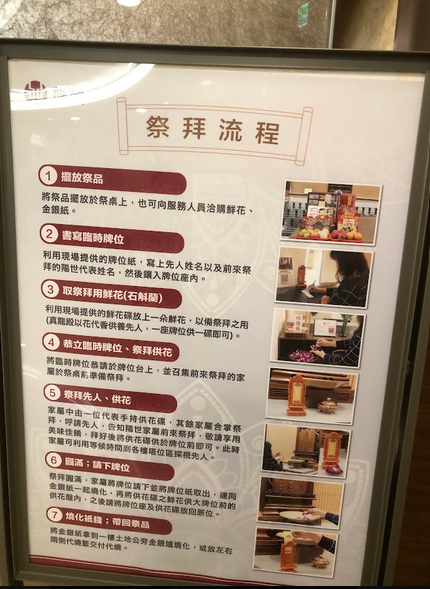
- True Dragon Temple’s 7 Steps on How to Worship Your Ancestors. Although the explanation for how to conduct these rituals seen here are specific to how people should conduct their rituals in True Dragon Temple’s columbarium, many of the rituals are similar to the rituals people have traditionally done at grave sites.
Section 2: Firecrackers and Weeding: What One Does at a Taiwanese Gravesite
Qingming (清明) Festival is a day when many people clean their families’ tombstones, make any necessary repairs (i.e. repainting statues), and remove weeds at the cemetery. They also may leave offerings of food and flowers, light incense, and burn paper money.¹ When I visited a graveyard on Tomb Sweeping Day, the ritual that surprised me the most was the lighting of firecrackers. People seemed to work hard to ensure their ancestors’ tombs looked nice. I could have mistaken their hard work as turning the graveyard into a garden if I had been watching at a distance.
¹Kulik, Rebecca M. 2026. “Qingming Festival | Traditions, Food, Meaning, China, History, Tomb Sweeping, Practices, & Significance.”
Section 3: The Largest Columbarium in The World
Although the most common way to handle a dead body in most of Taiwanese history may have been to bury a body into the ground, today only twenty-one percent of Taiwanese are buried due to a lack of affordable land.²
Most people are now cremated. To store ones’ ancestors’ ashes in a way that requires only a little space, many people put deceased relatives into a columbarium. In fact, this is such a common practice in Taiwan that the island is home to the tallest columbarium in the world — True Dragon Temple³ (龍巖真龍殿).
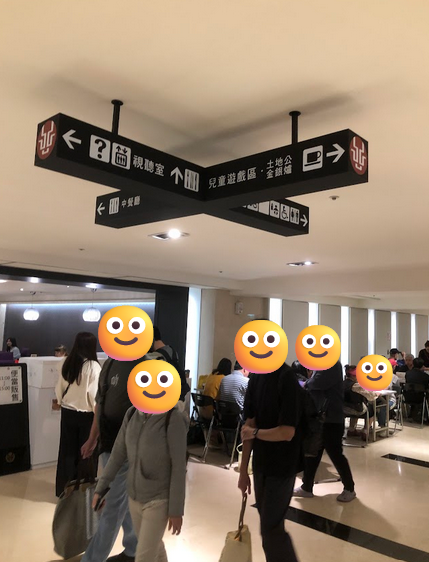
- The very crowded cafeteria in the basement of True Dragon Temple’s Columbarium
The size and diversity of the different rooms in the columbarium astonished me. Due to its massive size, I did not even have time to explore the entire place. Nevertheless, I had seen how people were able to conduct their rituals despite the constraints that the structure of the columbarium imposed.
Since the columbarium is too dense for people to leave offerings (or burn paper money) at the exact spot where they keep their families’ ashes, True Dragon temple has dedicated rooms where people can make offerings and burn money.
I learned here that family members may also burn more than just money. People may burn any kind of paper luxury (e.g., paper cars, cellphones, and mansions with servants). The reason people burn these items is the same reason why they burn paper money. They believe that if they burn these items for their ancestors, their ancestors can use them in the afterlife.³
I noticed the columbarium had an overtly Buddhist undertone to it. Inside the tower, there were Buddhist shrines, statues, and Buddhist chants that played on a sound system in various parts of the tower. This caused me to ponder what the religious or philosophical underpinnings of these rituals were.
²Steger, Isabella. 2019. “In Land-Scarce Taipei, the True Dragon Tower Is a Vertical Home for the Dead.”
³Kulik, Rebecca M. 2026. “Qingming Festival | Traditions, Food, Meaning, China, History, Tomb Sweeping, Practices, & Significance.”
Section 4: What Are The Underlying Ideas Behind These Practices?
Since there are often unclear boundaries between Taiwanese Buddhism, Daoism, and other Taiwanese folk beliefs and practices, it can be difficult to determine the exact reasons why people engage in specific rituals.
To try to learn more about the ideas that cause many Taiwanese to participate in these rituals, I asked six of my Taiwanese colleagues if and why they participated.
A natural question to ask participants seems to be what they believe happens in the afterlife. I was particularly curious since a poll from the Pew Research Center indicates that seventy-one percent of Taiwanese believe in rebirth after death (rebirth is similar to reincarnation).⁴ However, the belief in rebirth seems to contradict with the belief that deceased ancestors can use burned paper money in their afterlife. How could someone use the gifts and offerings that families gave to them if they already had been born into a new person?
Something I had found surprising was that many of my colleagues had not thought very much about the afterlife. For this reason, some of them had struggled to answer where they thought people went after they died. Perhaps this is because in Taiwan, there is a greater emphasis on the rituals one does for the dead than what actually happens to the dead.
Nonetheless, I received a variety of answers to this question: rebirth doesn’t exist but ancestral spirits exist, rebirth exists and ancestral spirits do not, nobody knows why some people are reborn and some become ancestral spirits, the soul is divided into three parts that go different places after death, etc.
Two of my colleagues say that they, or a family member, do not participate in the common rituals associated with the Qingming festival. Both report this is because they fail to fit into their religious beliefs. One of my colleagues’ husbands’ family is Christian. Since Christian beliefs in the afterlife often contradicts with the beliefs implicit in the Qingming rituals, this family never partakes in them. Indeed, polls suggest that Christians are the religious group least likely to honor their ancestors by lighting incense or presenting offerings of all religious groups surveyed in Taiwan.⁵
A second colleague claims not to celebrate Qingming Festival for Buddhist reasons. She seems to believe in rebirth and not ancestral spirits. Since there are no ancestral spirits, she believes that any offerings she makes to her ancestors will fail to reach them. Instead, she makes offerings to the Buddha to help guide people, including her ancestors, towards a better life.
She also seems to dislike that people burn incense and paper money because it generates pollution that is bad for both the environment and the lungs of the practitioners. She seems to see the tradition of burning and giving offerings as Daoist, not Buddhist.
Despite this, the Pew Research Center indicates that self-identified Buddhist Taiwanese are actually more likely than other kinds of Taiwanese to burn incense and paper money for their ancestors.⁵ Nevertheless, this may not be inconsistent with my colleagues’ claim. My colleague appears to believe that many self-identified Buddhists actually practice a mixture of Buddhist and Daoist rituals. Nevertheless, her response appears to show that some Buddhists in Taiwan see it as inconsistent for Buddhists to participate in many of the Qingming rituals.
⁴Evans et. al “5. Ancestor Veneration, Funerals and Afterlife Beliefs.” Pew Research Center: Religion and Spirituality in East Asian Societies.
⁵Evans et. al “4 facts about religion and diversity in Taiwan.” Pew Research Center: Religion and Spirituality in East Asian Societies.
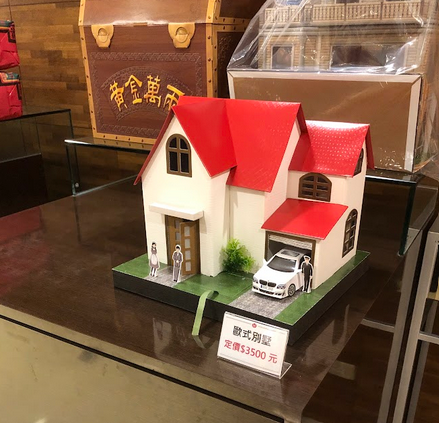
- Inside True Dragon’s Columbarium, there is a store where people can buy offerings for their ancestors. Here you can see a paper house with a car and servants ready to be burned for whoever purchases it!
Section 5: The Diversity of Taiwanese Traditions and Beliefs
Visiting a Taiwanese gravesite, a columbarium, and talking with my colleagues about Qingming Festival has highlighted to me how Taiwan is a place with many traditions and beliefs. To assume that there is only one ritual people do or have historically done on Qingming Festival seems not entirely accurate. Likewise, even if two people engage in the same tradition, each person may have different underlying beliefs about why they participate in the ritual. Taiwan can serve as a case study about why it is important to recognize the traditions and beliefs of people within a particular culture or geographic area can differ.
Nonetheless, despite these differences in Taiwan, Qingming Festival seems to be a popular day associated with the dead in Taiwan — even among Taiwanese who never observe it.
The many ways Taiwanese participate in Qingming Festival has given me an interesting insight into the culture that I have been living in throughout the past ten months. It has also given me many new ways to think about death, the afterlife, and our potential responsibilities to the dead.
Section 6: References
Evans, Jonathan, Alan Cooperman, Kelsey Jo Starr, Manolo Corichi, William Miner, and Kirsten Lesage. 2024. “5. Ancestor Veneration, Funerals and Afterlife Beliefs.” Pew Research Center: Religion and Spirituality in East Asian Societies. Pew Research Center. June 17, 2024. https://www.pewresearch.org/religion/2024/06/17/ancestor-veneration-funerals-and-afterlife-beliefs/#belief-in-rebirth-and-nirvana.
Evans, Jonathan, Alan Cooperman, Kelsey Jo Starr, Manolo Corichi, William Miner, and Kirsten Lesage. 2024. “4 facts about religion and diversity in Taiwan.” Pew Research Center: Religion and Spirituality in East Asian Societies. Pew Research Center. June 17, 2024. https://www.pewresearch.org/religion/2024/06/17/ancestor-veneration-funerals-and-afterlife-beliefs/#belief-in-rebirth-and-nirvana.
Kulik, Rebecca M. 2026. “Qingming Festival | Traditions, Food, Meaning, China, History, Tomb Sweeping, Practices, & Significance.” Encyclopedia Britannica. April 1, 2026. https://www.britannica.com/topic/Qingming-Festival.
Steger, Isabella. 2019. “In Land-Scarce Taipei, the True Dragon Tower Is a Vertical Home for the Dead.” Quartz. July 21, 2019. https://qz.com/1374487/taipeis-dragon-tower-provides-alternative-form-of-burial.
Leave a Reply